As products become more complex, ensuring that every assembly meets the required quality standard becomes increasingly challenging. In High-Level Assembly (HLA), a product may contain dozens of screws, labels, and identification points that need to be verified before it moves to the next stage.
Manual inspection of these points can be time-consuming and dependent on operator experience. Missing a screw, incorrect screw condition, wrong label, or unreadable barcode can result in rework, production delays, or quality issues further downstream.
To address these challenges, the Kitron Global Automation Team developed an Automated Optical Inspection (AOI) Machine for HLA, combining robotic handling, advanced vision inspection, and MES connectivity into one automated solution.
The machine is designed to provide consistent inspection, identify defects early, and create a digital record of every inspected product.
How Does It Work?
The process starts with the operator loading the product into the inspection area. The system identifies the product and automatically selects the corresponding inspection recipe.
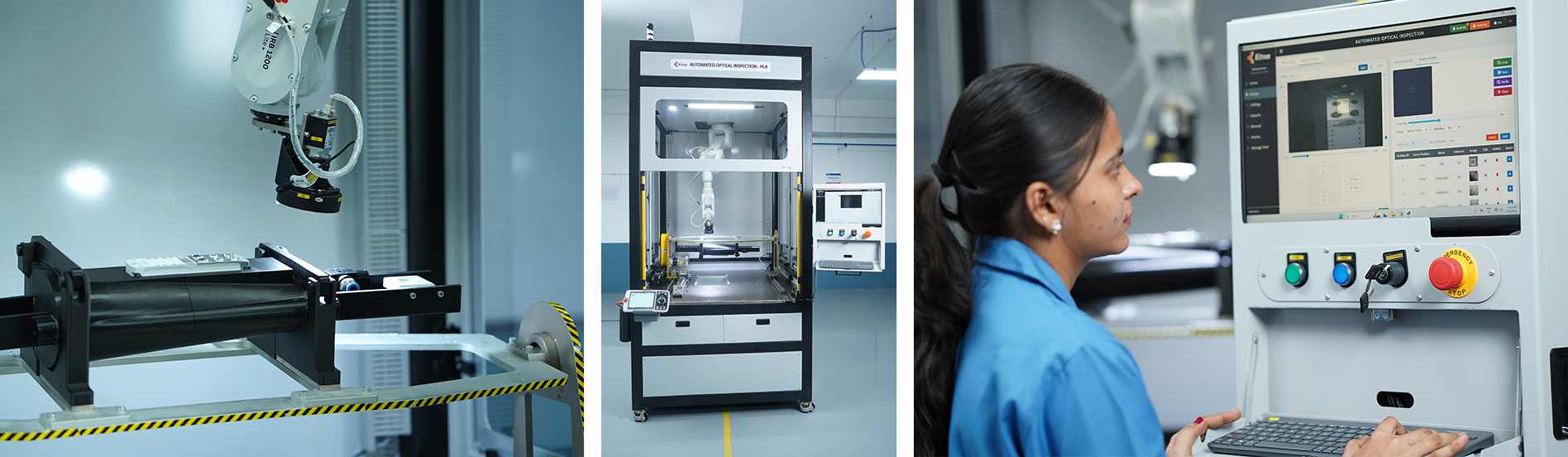
A robotic system then moves the vision system through predefined inspection points, capturing images of the required areas with consistent positioning and repeatability.
The vision system analyzes each inspection point against the defined acceptance criteria. Depending on the product recipe, the machine can verify screw presence, screw condition and protrusion, label information, barcode readability, and other defined visual characteristics.
The inspection results are evaluated automatically, and the product is classified as pass or fail. If an issue is detected, the system alerts the operator for further action.
All relevant inspection and identification data can be transferred to the MES, creating traceability for each product and reducing the need for manual data entry.
Key Features & Benefits
Robotic Inspection
The robotic inspection system provides repeatable movement across multiple inspection locations, ensuring every product is inspected using the same defined process while reducing operator dependency.
Advanced Vision Inspection
The vision system performs multiple checks within the same inspection cycle, including screw presence, screw protrusion, label verification, barcode reading, and other product-specific visual inspections. This helps identify defects before they progress further in the production process.
Flexible & Expandable Inspection
The inspection platform is designed to evolve with changing HLA product requirements. Additional inspection points and new inspection criteria can be added as new products or quality requirements are introduced.
The vision system also provides the flexibility to integrate and train new inspection models and algorithms for different applications, enabling the machine to support future inspection requirements without redesigning the complete system.
This makes the platform adaptable for a wider range of HLA products while providing a foundation for continuous improvement in automated inspection.
Recipe-Based Inspection
Different products can be supported through dedicated inspection recipes. The system automatically applies the relevant inspection parameters based on the identified product, enabling faster product changeover and consistent inspection standards.
MES Connectivity & Traceability
Inspection results, barcode information, and product status can be transferred to the MES, creating a digital inspection record for each product and reducing manual data entry.
Integrated Safety
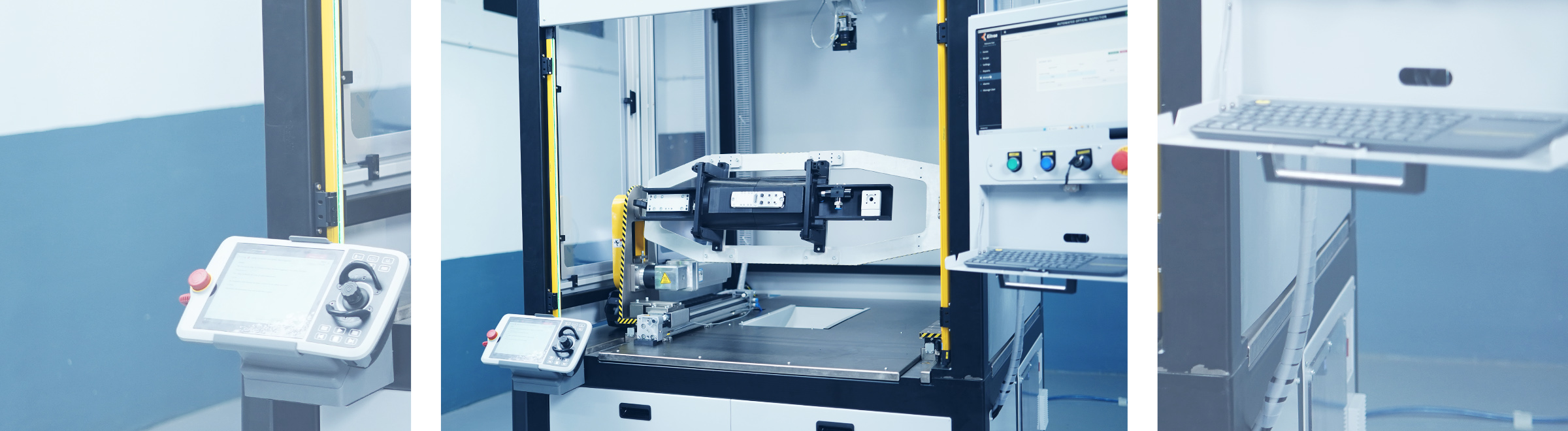
Safety features such as light curtains and door interlocks help protect operators by stopping the machine when access to the inspection area is detected.
Have an Automation Challenge?
The AOI-HLA machine was developed from a real manufacturing need and demonstrates how automation can be applied to solve specific quality and production challenges.
If your site has a repetitive inspection task, manual quality check, traceability challenge, or an opportunity to improve process consistency, reach out to the Kitron Global Automation Team (GAT).