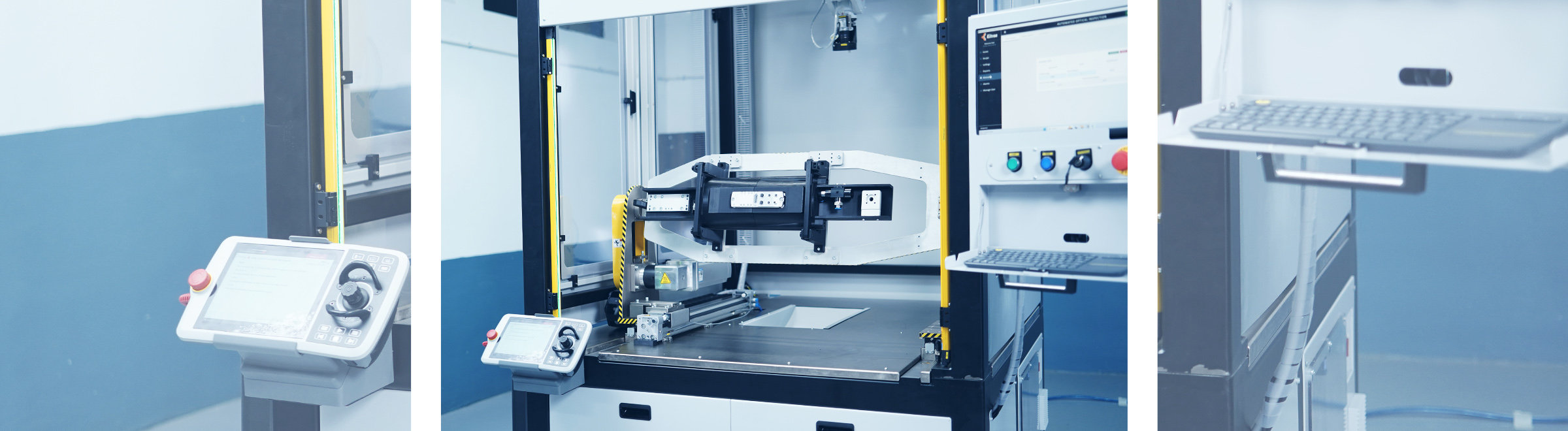
Kitron is dedicated to improving the efficiency of electronics manufacturing through innovative automated solutions. Our professional engineering teams across our global locations develop practical solutions that enhance flexibility, optimise resource utilisation, and meet our customers' evolving manufacturing needs.
Kitron China engineers have recently introduced and implemented the Modular Hybrid Workcell. This flexible solution is designed to integrate seamlessly with various electronics manufacturing processes, modularise sub-automation stations, be flexible to change, and support a wide range of product types and production requirements.
Rethinking Automation for High-Mix, Low-Volume Manufacturing
In today’s electronics manufacturing environment, small-scale automated solutions for electronics production processes, such as automated soldering and automated dispensing, have been widely adopted. However, these systems often operate independently, limiting overall production flexibility.
While individual automation solutions for specific processes, such as soldering or dispensing, are common, they often operate as a single standalone station or an automated line. There are relatively few solutions that can be freely combined based on different product manufacturing processes.
These kinds of automation solutions are often optimised for mass production, making them less flexible and cost-effective for smaller batch runs or frequent product changes.
Recognising this challenge, Kitron China’s engineers have reimagined the automation concept by developing a scalable, reconfigurable production workcell that can be easily combined and adjusted to support various production flows.
How It Works
The Modular Hybrid Workcell integrates human-machine collaboration to provide a highly adaptable and efficient production environment that accommodates the manufacturing requirements of diverse electronic products.
Each workcell features a modular design, allowing equipment such as the automatic soldering unit, automatic dispensing system, and work desks to be repositioned and adjusted as needed, making the system highly flexible.
Every station within the workcell is equipped with a standardised integration panel featuring quick-connect interfaces for compressed air, network access, power supply, and electrostatic discharge (ESD) grounding. These connections can be easily plugged or unplugged, enabling rapid setup and smooth transitions between production tasks.
.jpg)
The U-shaped layout of the workcell is designed to maximise operator efficiency and minimise unnecessary movement. By strategically positioning automated machines and manual work areas within close proximity, operators can manage multiple devices simultaneously with minimal effort.
The workcell setup also diverges from the traditional line layout at Kitron China's Suzhou manufacturing facility, improving workflow balance and overall station efficiency. As a result, the human resource utilisation rate in models already deployed has increased by 30% to 50%, demonstrating significant improvements in both productivity and workflow efficiency.
Summary
Kitron China’s Modular Hybrid Workcell breaks away from the traditional line layout, enabling better workflow optimisation. Its modular, flexible, and mobile design supports high-mix, low-volume production.
By combining human-machine collaboration, standardised quick-connect interfaces, and a U-shaped layout, the workcell has already increased human resource utilisation, delivering significant gains in productivity, flexibility, and overall operational efficiency.
This workcell showcases Kitron China’s commitment to delivering flexible and efficient solutions that evolve with customer needs.